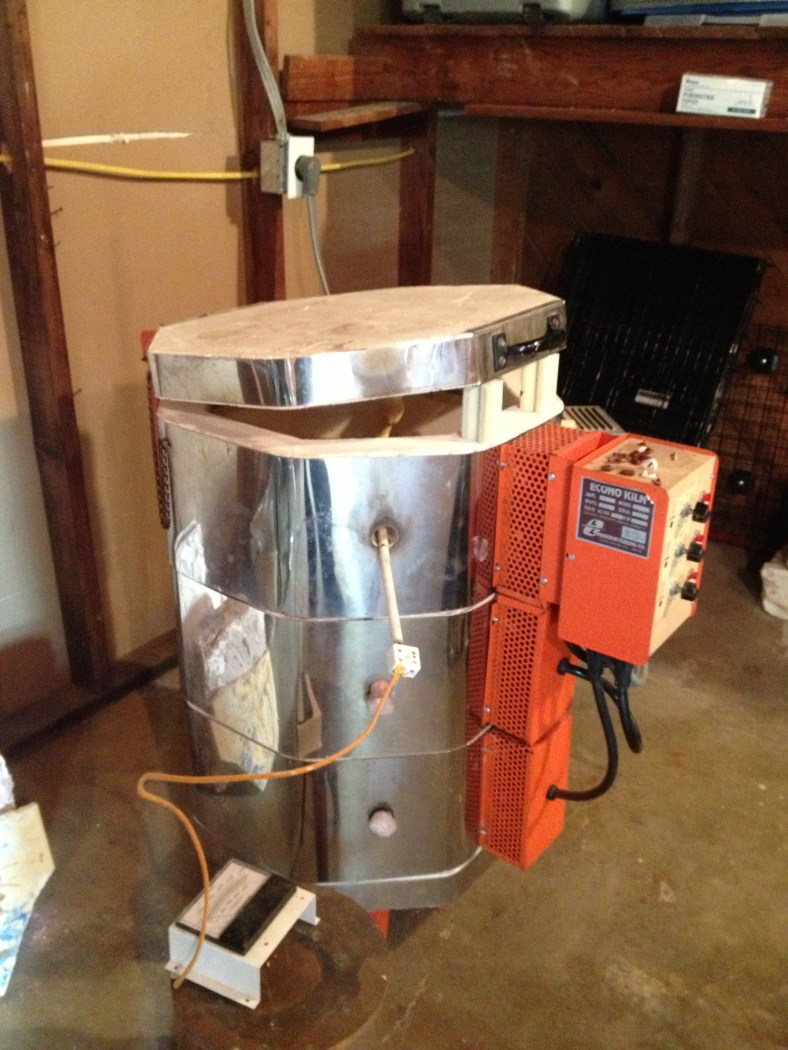
It's a time machine, no  it's  a space ship, no it's R2D2...wait...its Leslie's beautiful kiln!!!

Here is a glimpse into a world of clay and creation—I wanted to post a series of pics start to finish of the glazing process. Here you see the kiln cooling down. It was fired two nights ago and this morning I peaked inside. I will show you the technique I use to make my functional ware along with my sculpture. It might be something you would like to use in your own ceramic work—or just plain curious about what’s coming out of this pretty little fire box. If you have any questions about anything on this blog feel free to contact me—I would be happy to go more in depth in the process, and hope to reveal more secrets I’ve got up my sleeve.
It’s a time machine, no it’s a space ship, no it’s R2D2…wait…its Leslie’s beautiful kiln!!!

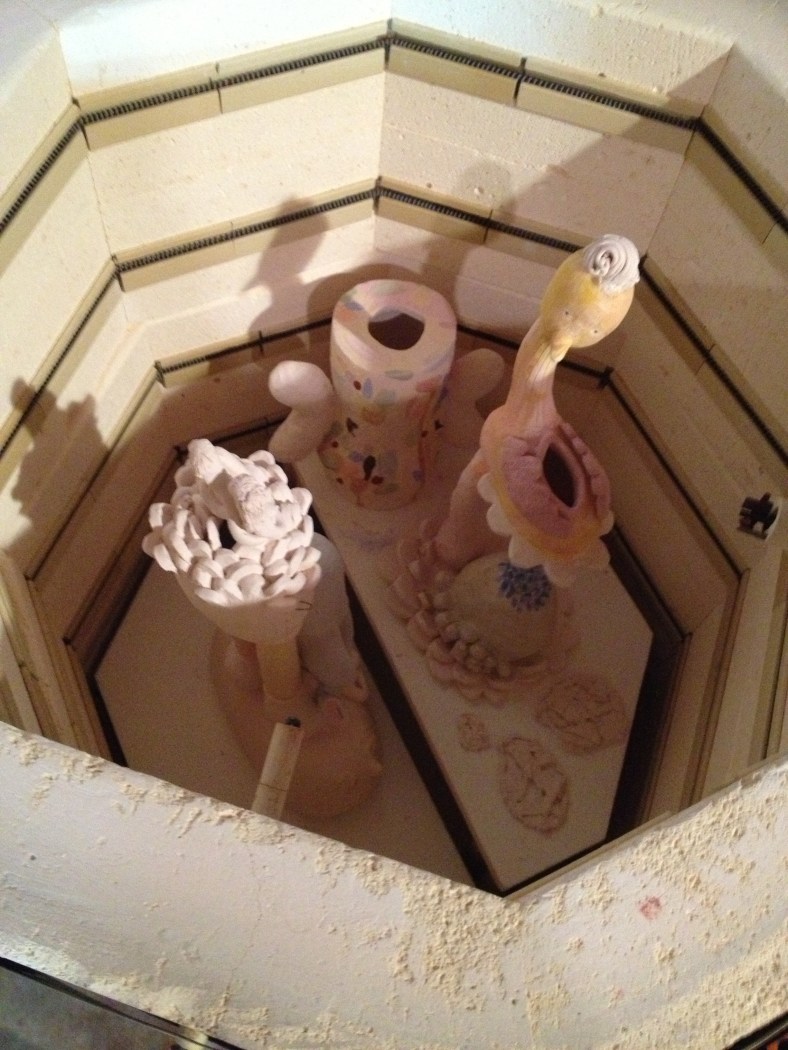
Let's peak inside

Skip over this if technical stuff bores you. For those of you who stuck around..The picture shows a kiln after a completed firing, or bisque—it is done at a relatively low temperature. Usually 1700-1950 degrees F. This is a slow process. The most number of accidents occur during this time—due to misfiring. If the temp in the kiln is taken too hot too fast it will cause explosion. Moisture can’t escape the clay fast enough. I usually candle my kiln (150-250 degrees F) at least six hours for sculpture to make sure all moisture has left the clay walls.

Let’s peak inside

next step

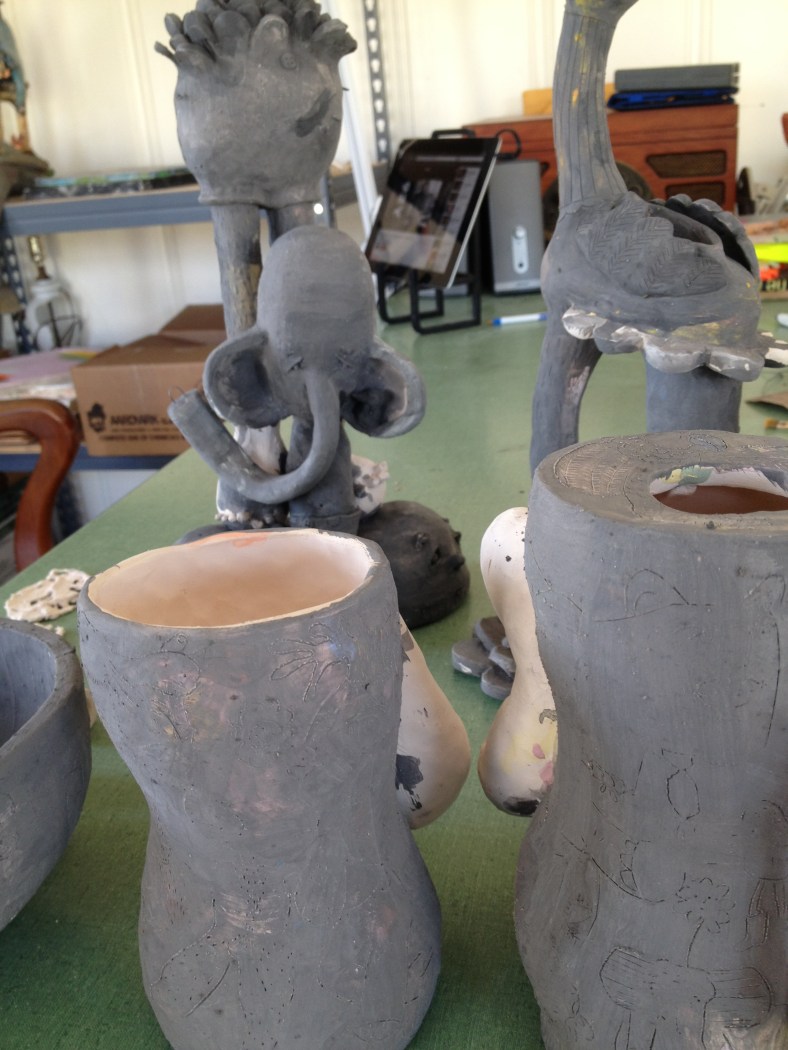
Now the surface of the pieces are coated with a black underglaze. It’s essentially a liquefied clay that also has oxides and mason stains included to give the dark hue. I buy everything commercially through my local clay store.

next step

cups after bath

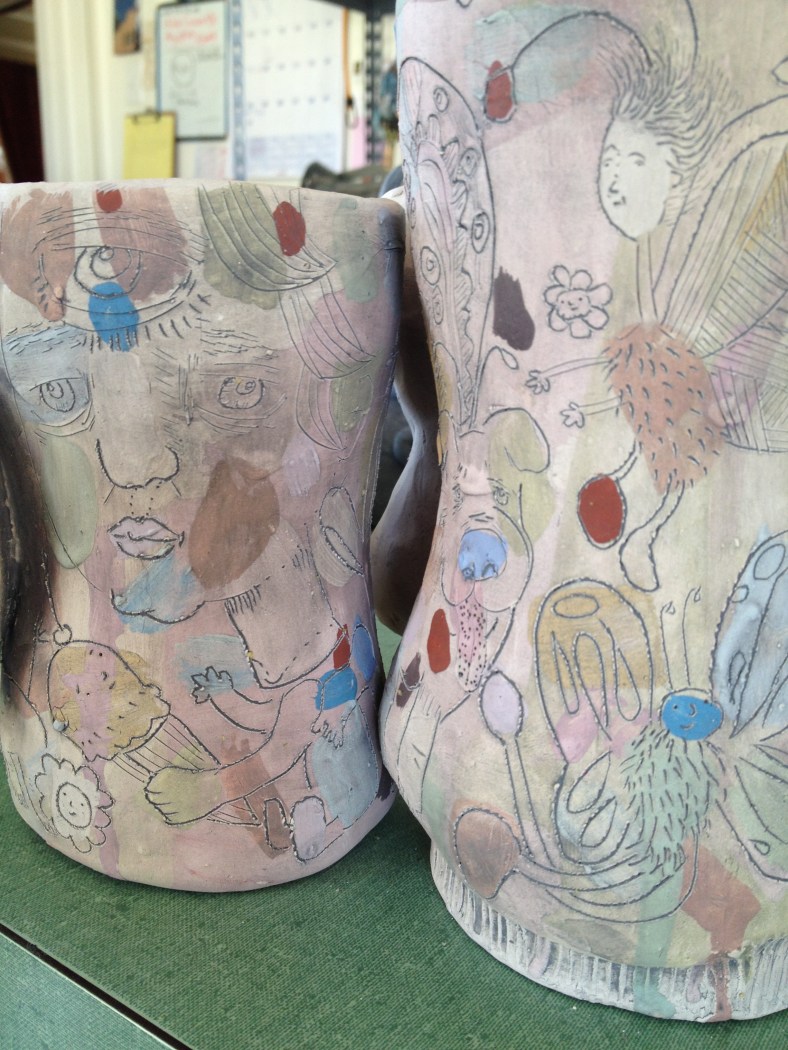
This is my favorite step in the glazing process. I become so absorbed in the work that it feels as if have I shrunk down to a tiny archaeologist unearthing lost information in the stratum. Excavating abandoned networks of streets and forums left behind by other equally tiny villagers. The forgotten characters (i.e. the cup’s spark of life) are rejuvenated by the dark baptism and born again more defined as a result of the residue left in the burrs of the ancient, esoteric inscription.
If anyone has taken an intaglio class or knows about the process—the concepts are very similar. Instead of metal and ink—its clay and oxides.
At this point they will then have a thin coat of clear glaze to protect their detail.

cups after bath